
Rest Isn’t Fixing Your Elbow Pain
Sharp pain when you shake a hand, lift a coffee cup, or grip a hammer. It showed up gradually, you rested it like everyone told you to, and it’s still there weeks later. That’s the frustrating reality of tennis elbow and golfer’s elbow – two of the most common causes of chronic elbow pain, and two conditions that rarely resolve with rest alone.
Despite the names, most people who develop these conditions have never picked up a racquet or a club. If you type, lift, grip tools, swing a hammer, or work with your hands in any repetitive way, you’re a candidate. Understanding what’s actually happening in the tissue explains why “just give it time” so often fails.
The Anatomy
Both conditions involve the tendons that attach your forearm muscles to your elbow. Tennis elbow, known clinically as lateral epicondylitis, affects the tendons on the outside of the elbow. These tendons are used every time you extend your wrist or fingers – reaching for something, typing, or straightening your hand after a grip.
Golfer’s elbow, or medial epicondylitis, affects the tendons on the inside of the elbow. These are used when you flex your wrist or grip something firmly, whether that’s a set of tools, a steering wheel, or a golf club.
Both attachment points are small, and both bear a surprising amount of repetitive load throughout an ordinary day.
Who Actually Gets This
Tradespeople who use hand tools repetitively. Desk workers whose hands stay in a fixed typing position for hours. Parents who lift and carry young children constantly. Musicians, hairstylists, mechanics, and anyone whose work relies on repeated wrist and grip movements. Athletes are a small fraction of the people we see with these conditions – the label is misleading.
What’s Actually Happening: Tendinosis, Not Tendinitis
Here’s the detail that changes everything about treatment: this usually isn’t simple inflammation. In the early stages, repetitive strain does cause an inflammatory response, which is why anti-inflammatories and rest can help temporarily. But when the strain continues faster than the tissue can repair itself, the tendon undergoes a structural change called tendinosis — a degeneration of the collagen fibers within the tendon itself.
This is a critical distinction. Tendinitis is inflammation. Tendinosis is a structural breakdown. An inflamed tissue can calm down with rest. A degenerated tissue needs an active stimulus to rebuild — rest alone doesn’t provide that. This is one of the most common misunderstandings in how these conditions are treated, and it’s a major reason people spend months resting a problem that keeps coming back.
Why Rest Alone Falls Short
Rest removes the aggravating movement, which can reduce pain in the short term. But it does nothing to address tissue that has already changed structurally, and it does nothing to address the surrounding muscles and fascia that contributed to the overload in the first place.
Many clients also carry chronic tension through the wrist flexors, forearm fascia, and even the shoulder and neck – areas that quietly shift extra load onto the elbow tendons without anyone noticing until pain appears. If those upstream patterns aren’t addressed, the same strain is waiting the moment activity resumes, and the cycle of pain, rest, and recurrence continues.
The Compensation Pattern
Pain changes how you move, often without you realizing it. Someone with tennis elbow may unconsciously grip differently, engage their shoulder more to avoid wrist extension, or shift how they carry weight through their arm. Over weeks, these compensations create new areas of tightness and restriction that persist even after the original pain starts to ease.
This is why a thorough assessment matters. Effective treatment doesn’t stop at the point of pain — it looks at the entire kinetic chain from the neck through the shoulder, forearm, and wrist to identify what’s actually driving the strain.
How Treatment Helps
Therapeutic massage addresses tennis and golfer’s elbow on multiple levels, working with the tissue rather than simply waiting it out.
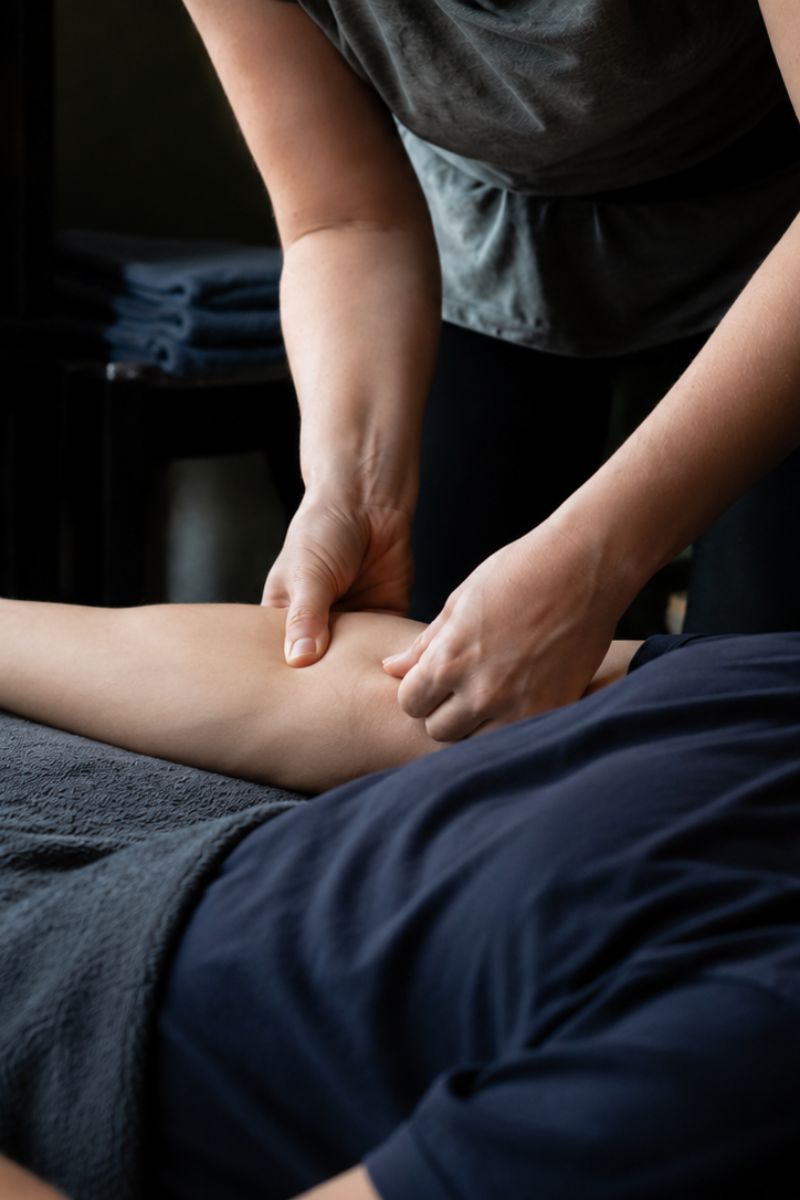
Deep tissue and trigger point work release the surrounding forearm muscles that are pulling on the tendon attachment. Tight wrist flexors or extensors create constant low-grade tension at the exact point where the tendon is already compromised, and releasing that tension takes pressure off the injury site directly.
Myofascial release addresses fascial restrictions that limit proper movement through the wrist and forearm. Because fascia forms a continuous network throughout the body, restrictions here can also be connected to tension patterns in the shoulder and upper back.
Graston Technique is particularly effective for tendinosis specifically. This instrument-assisted approach detects and breaks up the fibrous adhesions that form within degenerated tendon tissue, stimulating a renewed inflammatory and healing response in tissue that has otherwise stalled. It’s one of the few manual techniques designed specifically to address the structural nature of tendinosis rather than just the surrounding soft tissue.
Joint mobilization and targeted stretching restore range of motion that’s often quietly lost as the body compensates around the pain, while a personalized home care plan helps reinforce progress between sessions and prevents the same overload pattern from rebuilding.
What Recovery Looks Like
Because tendinosis involves genuine structural changes to the tissue, recovery is progressive rather than immediate. Most clients notice a gradual reduction in pain with grip and wrist movements over a series of sessions, rather than dramatic relief after one visit. This is normal, and it reflects the biology of how degenerated tendon tissue actually heals — through consistent, appropriate stimulus over time.
Clients who combine in-clinic treatment with the home care strategies their therapist provides tend to see the most durable results, since the goal isn’t just reducing today’s pain but changing the pattern that created it.
Preventing Recurrence
Once the tendon has healed, staying pain-free often comes down to addressing the habits and patterns that led to the strain in the first place. This might mean adjusting how a tool is gripped, taking more frequent breaks during repetitive tasks, or maintaining flexibility through the forearm and wrist with simple movements built into a daily routine. Your therapist can help identify which of these applies to your specific work and lifestyle.
Regular maintenance treatment can also help catch early tension patterns before they progress into a full flare-up, which is often far easier to manage than waiting for pain to return.
This is especially true for tradespeople and anyone whose job can’t simply be paused. Building periodic treatment into your routine, rather than waiting until pain forces the issue, is often the most realistic long-term strategy for people who rely on their hands and arms every working day.
When to Seek Care
If gripping, lifting, or typing is still painful several weeks in, that’s a clear sign the tissue needs more than time. The earlier tendinosis is addressed, the less compensation and secondary tension has had a chance to build elsewhere in the arm and shoulder.
You don’t have to keep resting and hoping. There’s a reason this pain hasn’t resolved on its own — and it’s one our therapists are trained to find and treat.
At All Deep Massage & Wellness, every session begins with a thorough assessment of your specific needs. Whether you’re chasing relief from chronic pain or simply need your nervous system to finally exhale – we’ll make sure you’re getting exactly what your body needs. Ready to get to the root of what your body has been trying to tell you? Call us at 780-416-0659, email us at bookings@alldeepmassage.com, or book online at alldeepmassage.com.