The Real Science Behind Your Feet
Reflexology is often described as an ancient practice built on maps connecting the feet to internal organs. What’s less talked about is the more grounded explanation for why it works: your feet are home to one of the highest concentrations of nerve endings and mechanoreceptors in the entire body, and stimulating them has a measurable effect on your nervous system.
A Nerve-Dense Landscape
Your feet contain roughly 7,000 nerve endings each, packed into a relatively small surface area. This density rivals your hands and lips – areas your brain devotes significant processing power to, a concept known in neuroscience as cortical magnification. The feet are also home to several distinct types of mechanoreceptors, each responding to a different kind of input: some detect sustained pressure, others respond to vibration, and others pick up on stretch and texture. When a trained therapist applies precise, sustained pressure to specific points on the foot, these receptors send signals directly to the central nervous system, triggering responses that extend well beyond the foot itself.
Where the Practice Began
Reflexology’s origins trace back to zone therapy, a framework developed in the early twentieth century that divided the body into ten longitudinal zones, each said to correspond to specific reflex points on the feet. While the traditional zone maps remain part of how reflexology is taught and practiced today, modern research has offered a more physiological explanation for the effects clients experience – one rooted in nerve pathways and nervous system regulation rather than organ-specific energy channels.
Activating the Parasympathetic Response
One of the clearest mechanisms behind reflexology’s effects is its impact on the autonomic nervous system. Firm, rhythmic pressure activates mechanoreceptors that signal safety to the brain, helping shift the body out of sympathetic “fight or flight” activation and into the parasympathetic “rest and digest” state. This is the same physiological shift responsible for slower heart rate, deeper breathing, and the drop in cortisol that makes reflexology sessions feel so calming – not a vague sense of relaxation, but a real, trackable nervous system change.
This shift matters more than it might seem. Chronic stress keeps the sympathetic nervous system in a near-constant state of low-grade activation, which can affect everything from digestion to sleep quality to muscle tension throughout the body. Consistently giving the nervous system a clear, physical signal to downshift is one of the more measurable ways therapeutic touch supports overall wellbeing.
Gate Control and Pain Perception
Reflexology also draws on a well-established concept in pain science called gate control theory. Non-painful pressure input travels along nerve fibers faster than pain signals do, effectively closing a “gate” in the spinal cord that would otherwise let pain signals through to the brain. This is part of why firm pressure on the feet can create a genuine, if temporary, reduction in how pain is perceived elsewhere in the body.
This mechanism is the same principle behind why rubbing a bumped elbow provides quick relief, or why applying pressure near an injury can ease discomfort before the injury itself is directly treated. Reflexology applies this same gating effect in a structured, therapeutic way.
Why It Feels Connected to the Whole Body
The feet don’t operate in isolation. Nerve pathways from the lower body connect into the same spinal and central nervous system network that processes signals from everywhere else. Calming input at the feet can influence how the nervous system regulates tension patterns throughout the body – which is likely the physiological reality behind the sensation that reflexology affects more than just where the pressure is applied.
This is also why many clients report feeling effects seemingly unrelated to their feet, like easier breathing, a quieter mind, or looser shoulders. Rather than the point-to-organ mapping traditionally described, this is better explained by the nervous system’s role as an interconnected communication network, where calming input in one area influences regulation throughout the whole system.
What This Means in a Session
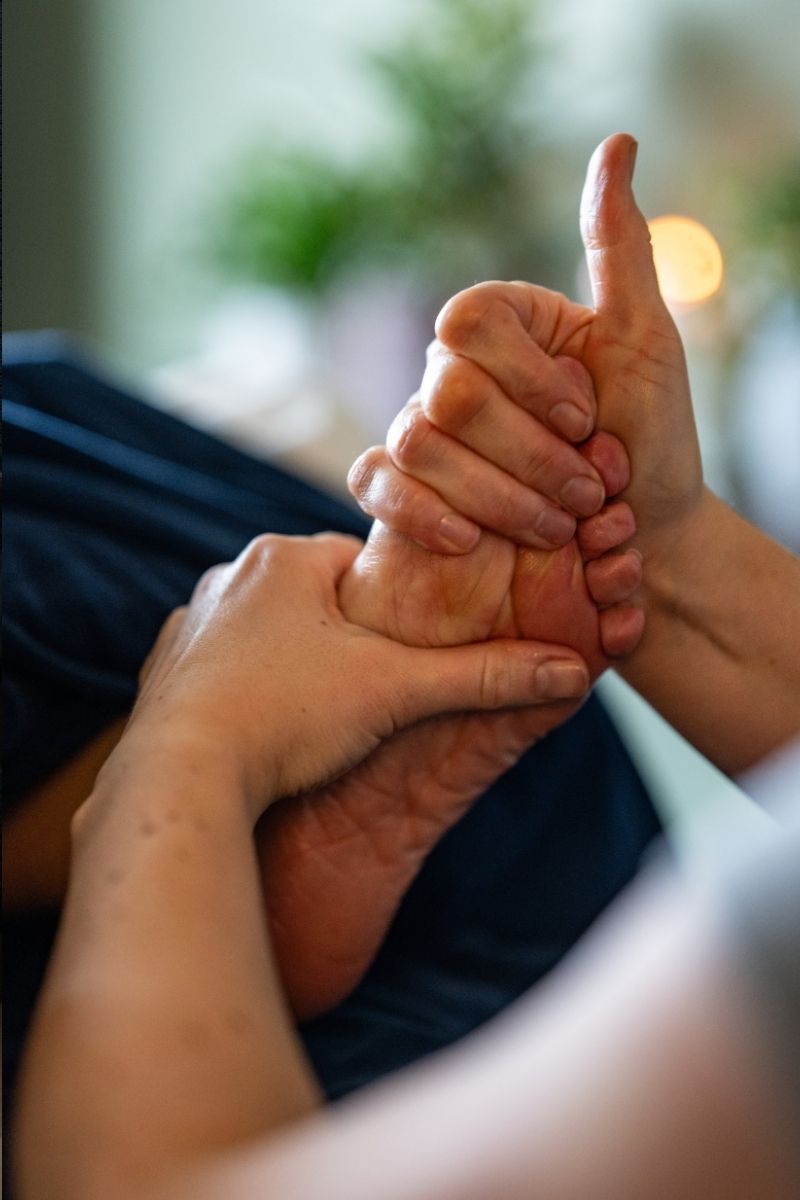
A reflexology treatment isn’t a casual foot rub. It uses precise, sustained thumb and finger pressure at specific points, adjusted to your comfort level throughout. You remain fully clothed, and most sessions focus entirely on the feet, though some therapists incorporate the hands and ears as well.
Because the nervous system responds to consistency and repetition, many clients notice the calming effect compounding across sessions rather than starting from zero each time. A single session can feel deeply relaxing, but a series of consistent treatments tends to produce more lasting shifts in how the body holds tension and responds to stress.
Who It Helps
Reflexology is a strong fit for anyone carrying chronic stress, dealing with sleep difficulty, or managing pain conditions where a gentler, non-invasive approach is preferred. It’s particularly well suited to clients who find deep tissue work too intense for a given day, or who are managing pain in an area too sensitive for direct treatment – since the gate control mechanism allows the nervous system to be influenced without needing to work directly on the site of discomfort.
It also pairs well with other therapeutic work as a way to downshift the nervous system before or after deeper tissue treatment, or as a standalone session on days when your body needs calming input rather than intensive work.
For desk workers, hours of sitting can leave the feet and lower legs under-stimulated and circulation sluggish, while tradespeople who are on their feet all day often carry cumulative tension and fatigue through the same nerve-dense tissue that reflexology targets directly. In both cases, the feet are doing significant, often overlooked work, and giving that tissue focused attention supports more than comfort alone.
Supporting Circulation
Beyond its nervous system effects, the firm, rhythmic pressure used in reflexology also supports local blood flow to the feet and lower legs. Improved circulation helps deliver oxygen and nutrients to tissue that, especially for people who sit or stand for long periods, doesn’t always get adequate blood flow throughout the day. This is a secondary but meaningful benefit alongside the primary nervous system effects, and it’s part of why clients often notice their feet feeling lighter and less fatigued after a session.
The Bigger Picture
What makes reflexology worth understanding isn’t the idea of a map printed on the sole of your foot – it’s the reality that your feet are a direct, nerve-rich access point into your nervous system. Precise pressure applied there doesn’t need mystical explanation to be effective. It works because of how densely innervated your feet are, how directly connected they are to your central nervous system, and how reliably targeted pressure can shift your body’s physiological state.
Your feet are doing more than carrying you through the day. They’re one of the most nerve-dense, responsive parts of your entire body, and a direct line into how your nervous system regulates stress, tension, and pain. Understanding that science doesn’t make the experience any less soothing — if anything, it explains why the effects are so consistent, session after session.
At All Deep Massage & Wellness, every session begins with a thorough assessment of your specific needs. Whether you’re chasing relief from chronic pain or simply need your nervous system to finally exhale – we’ll make sure you’re getting exactly what your body needs. Ready to get to the root of what your body has been trying to tell you? Call us at 780-416-0659, email us at bookings@alldeepmassage.com, or book online at alldeepmassage.com.